Punjabi University Patiala's Wrong Marking Crisis: 2,720 Papers Revaluated
Students at Punjabi University Patiala protested for months after widespread wrong marking forced the revaluation of 2,720 answer sheets. The episode is a precise illustration of where manual evaluation processes break down.
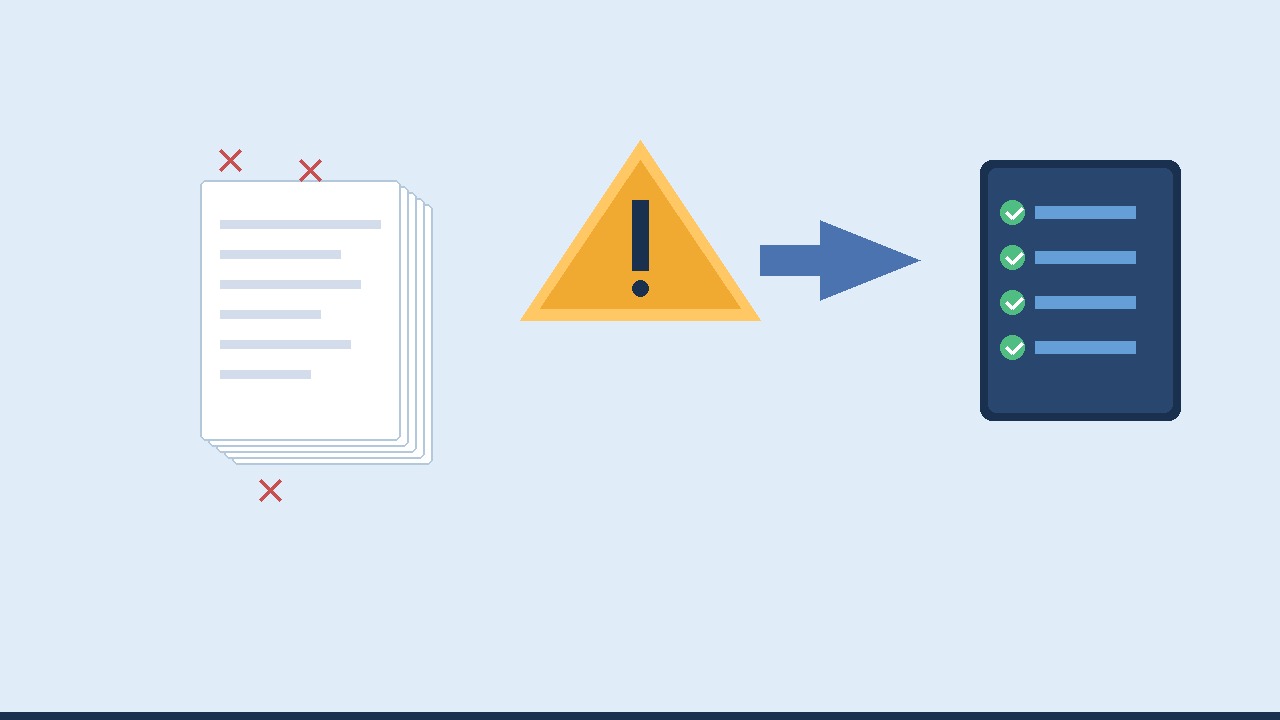
When the Marks Simply Did Not Add Up
In August 2026, students from Punjabi University Patiala and Government Mohindra College gathered on campus to protest wrong marking in recent semester examinations. The grievances were specific: over 300 students had reportedly received zero marks in papers despite sitting the examination. Students alleged discrepancies between the scores visible on their physical answer sheets and the marks displayed on the university portal. Others said they had received near-zero scores in subjects where they had written full answers.
The university administration initially attempted to contain the issue through a review covering a small number of students. When those results showed that marks had indeed been miscalculated — some students moving from fail to pass — the size of the problem became harder to minimise. Students escalated, holding additional protest marches in September and demanding that pending revaluation results be released. By the time the university declared the review complete, 2,720 answer sheets had been revaluated.
That figure — 2,720 papers requiring a systematic redo — represents a significant operational and reputational failure. It is not the number of papers with clerical errors that were caught and corrected quietly; it is the number that students had to formally demand be reconsidered, after protests, committee formations, and months of delay.
The Mechanics of How This Happens
Wrong marking events at Indian universities are not random or rare. They follow a predictable pattern tied to how manual evaluation works.
In a standard physical evaluation camp, each evaluator handles a batch of answer booklets under time pressure. After marking each response, they record the score at the top of the page. At the end of the booklet, they total all page scores by hand and write the grand total on the cover. This final addition step is where errors cluster. A study of revaluation data from major affiliating universities shows that addition errors — correctly marked individual questions totalling incorrectly on the cover — account for a significant share of mark discrepancies that only surface during formal challenges.
A second failure mode is unchecked responses. Under pressure to complete batches quickly, evaluators sometimes miss a page, a sub-question, or a continuation sheet tucked into the booklet. The student receives zero for that section not because the answer was wrong but because it was overlooked. In a physical booklet evaluated by a single human under time pressure, there is no automated catch for this.
The third failure mode is the re-entry gap. Once an evaluator marks a physical booklet, the marks must be entered into the university's results system by a data entry operator. Transcription errors at this stage — a digit transposed, a decimal misplaced, a wrong roll number — produce systematic wrong marks that bear no relationship to what the evaluator actually awarded.
At Punjabi University Patiala, the protests referenced discrepancies between scores on the physical sheet and what was shown online, which is consistent with re-entry errors. The students who reported zeros in papers they answered are more consistent with the unchecked-response pattern.
What the Revaluation Process Cost
University revaluation processes are not trivial. When a student files for revaluation, the paper must be retrieved from the storage facility (if it is still there), routed to an appropriate evaluator, marked again, and a formal revised result issued. Under normal circumstances this takes weeks. When 2,720 papers are in the queue simultaneously — because the problem was systemic, not individual — the queue stretches to months.
The students who protested in September were asking for pending revaluation results that had been in process since August. That is a semester of academic limbo for the affected students — unable to proceed with postgraduate applications, placements, or planning that depends on knowing their final result. Some students who had been marked absent were likely held back from programmes they had applied to.
The reputational cost for the university compounds over time. Students share their experiences, and in a competitive environment where students and parents now cross-reference institutional performance data before choosing an affiliated college, wrong marking events leave a mark that official assurances do not easily erase.
What Onscreen Evaluation Addresses Directly
The three failure modes described above — addition errors, missed responses, re-entry transcription — are structurally eliminated by onscreen evaluation systems.
Addition errors: In an onscreen system, evaluators enter marks question by question on screen. The platform calculates the running total automatically. There is no manual addition step and therefore no addition error.
Missed responses: Modern onscreen evaluation platforms flag unanswered pages before an evaluator can submit. Each page must be explicitly marked or explicitly annotated as blank. The system will not accept a submitted evaluation that has open pages unaccounted for.
Re-entry transcription: There is no re-entry step. Marks are entered once, by the evaluator, on the platform that feeds directly into the results system. The data path has one step, not two.
These are not marginal improvements. They directly address the mechanical causes of the type of wrong marking that Punjabi University Patiala experienced. A university that processes 2,720 revaluation requests is almost certainly experiencing multiple failures in these categories simultaneously.
The Pattern Across Indian Universities
Punjabi University Patiala is not an outlier. Universities in West Bengal, Rajasthan, Uttar Pradesh, and Telangana have all seen comparable events in 2026 — large-scale wrong marking controversies followed by student protests and forced revaluation runs.
In each case, the root cause analysis eventually leads to the same set of points: evaluator workload, manual totalling, inadequate pre-release checking, and fragile data entry processes. In each case, institutions that have adopted onscreen evaluation are absent from the reported incidents. The University of Rajasthan moved a significant portion of its evaluation to onscreen processes in 2025 and reported notably fewer formal revaluation applications in its subsequent semester compared to the same period a year prior. This is not causal proof, but it is the directional signal that university examination controllers are paying attention to.
What Institutions Can Do Ahead of the Next Exam Cycle
The practical implication for university examination departments is straightforward. The window between each exam and the next is the preparation window.
Audit the failure points in the current process. Map where addition errors, missed pages, and transcription errors are most likely. Universities that have not done a structured root-cause analysis of their revaluation applications in the past two years are working blind.
Prioritise high-volume subjects for digital transition first. A university does not need to digitise everything simultaneously. Starting with the programmes or semesters that generate the most revaluation requests gives the highest initial return.
Document the transition for NAAC and NIRF purposes. Every institution in this sector is preparing for accreditation review. The documented shift from manual to onscreen evaluation — with before/after data on revaluation rates, error counts, and time-to-result — is the kind of evidence that NAAC Criterion 2.5 and NIRF Graduation Outcomes scoring respond to directly.
The 2,720 papers at Patiala represent a problem that the next institution to face it will be expected to have had a plan for. The tools to prevent it exist. The cost of not using them is visible, measurable, and now in the public record.
Related Reading
Ready to digitize your evaluation process?
See how MAPLES OSM can transform exam evaluation at your institution.